Stamped concrete vs. pavers vs. flagstone: which patio surface survives Maryland?
A 2026 head-to-head on the three patio surfaces we build most in Montgomery County — cost, freeze-thaw durability, drainage, and resale.
Natural stone flagstone patios installed dry-laid over a compacted CR-6 base or mortar-set on a poured concrete slab. Pennsylvania bluestone (full-color and blue-gray), Tennessee Crab Orchard sandstone and select Arizona sandstone — hand-cut joints, polymeric or mortar pointing, drainage detailed for Montgomery County clay and a freeze-thaw February.
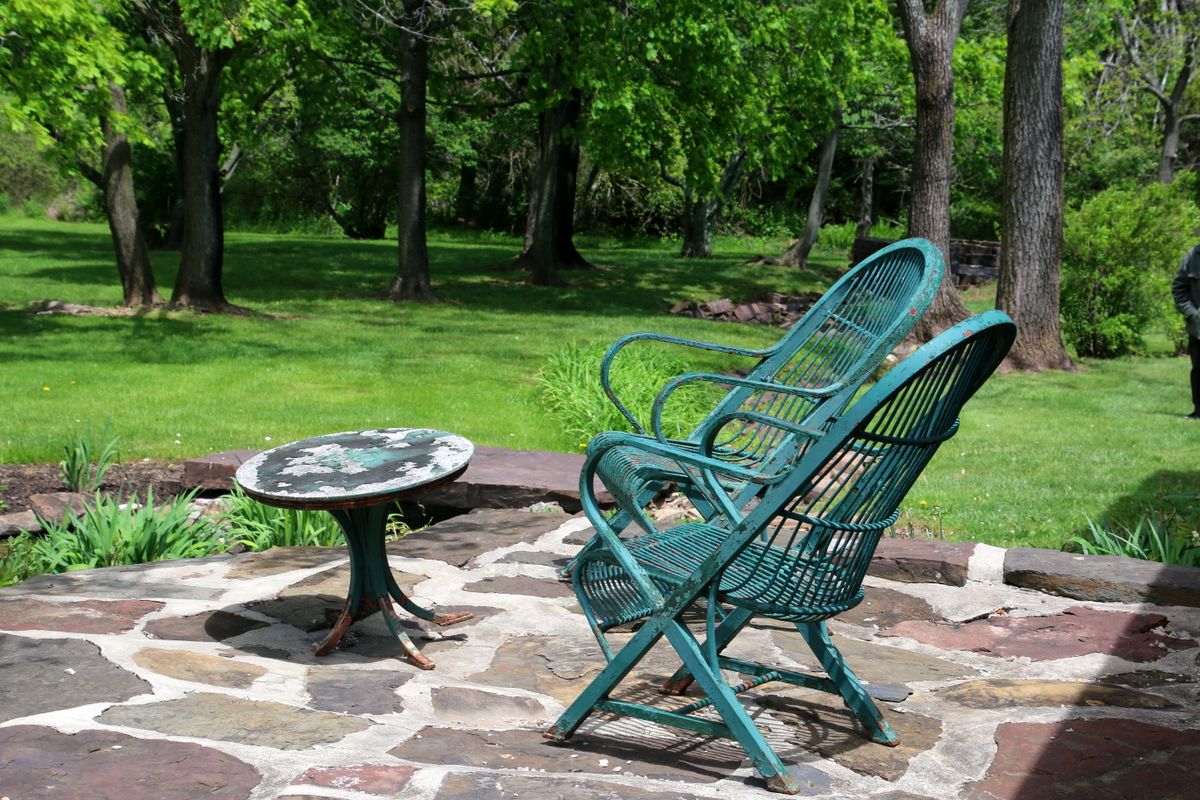
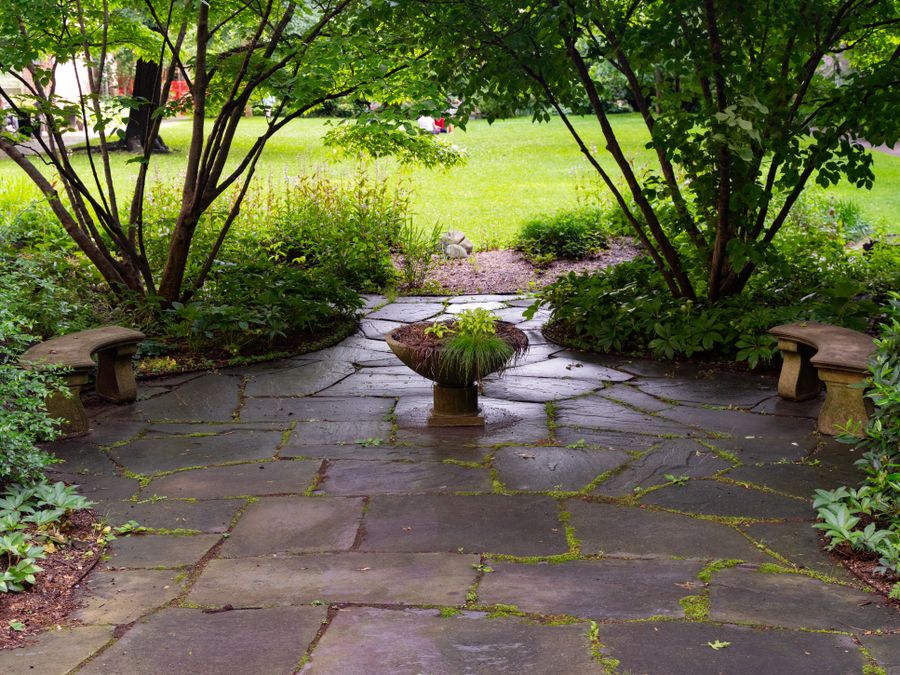
The argument for flagstone in Maryland writes itself: Pennsylvania bluestone is quarried roughly two hours from us, freeze-thaw rated, dimensionally stable, and tested by 250 years of porches and patios across the mid-Atlantic. Most of the bluestone we lay in Bethesda was cut from the same Endless Mountains seam that built Georgetown’s sidewalks. It belongs here in a way that few other patio surfaces do.
What we plan for job-by-job in our service area:
The honest 2026 number for a properly built flagstone patio in our service area is $22 to $48 per square foot, with most projects landing $26 — $36. The two big drivers are the stone choice and whether it’s dry-laid or mortar-set. Below is the same line-item breakdown that ships with every Kempf Mill proposal.
The same 400 sq ft patio in mortar-set thermal-cut bluestone over a poured slab lands $14,000 — $19,000. Larger 600–800 sq ft Potomac patios with formal cut-pattern layouts run $18,000 — $32,000. For broader context on how reinforcement and sub-base choices drive concrete-work pricing in Maryland, the journal post The honest cost of a concrete driveway in Maryland — 2026 breakdown walks through the same arithmetic.
350–500 sq ft dry-laid irregular bluestone is the most-installed Rockville rear-yard spec — lower-budget hand-laid look.
Larger 600–1,000 sq ft formal pattern bluestone — thermal-cut, mortar-set, integrated with seat walls and step-downs.
400–700 sq ft mortar-set bluestone over a concrete sub-slab, often pairing with existing brick walks and trim.
4″ of compacted CR-6, geotextile fabric below it, 1″ of stone dust or coarse sand on top, then the flagstone laid and leveled stone-by-stone, joints filled with polymeric sand and locked with a misting. Stones float on the base — freeze-thaw movement is absorbed by the joints instead of cracking the stone. Repair is straightforward: lift a settled stone, top up the bedding, reset.
A 4″ reinforced concrete sub-slab is poured first, cured, then the flagstone is set in a mortar bed with mortared joints. Result is a perfectly level surface that doesn’t move, won’t grow weeds in the joints, and reads more formal — but mortar joints are less forgiving of freeze-thaw and can hairline crack over a decade. We use a polymer-modified mortar formulated for outdoor MD use.
Our most-laid stone. Blue-gray, lilac, rust and green tones in a single field. Thermal-cut 1.5″ for mortar-set work; natural cleft 1–2″ for dry-laid. Quarried from the Endless Mountains in northeast PA — freeze-thaw rated and dimensionally stable.
The same material, sorted for uniform blue-gray color only. Reads more modern, especially against contemporary infill homes in inner Bethesda and Chevy Chase. Premium of $2–$4 / sq ft over full-color.
Warmer earth tones — tan, rust, cream — that pair with traditional Tudor and Colonial homes across Bethesda and Potomac. Needs sealing every 3–5 years to protect against MD freeze-thaw absorption.
The warmest, lightest flagstone we install — goldens, oranges, light greens. Higher water absorption than bluestone means it cups slightly in extreme freeze-thaw cycles. We seal it on install and recommend a 3-year reseal schedule for installs in shaded north-facing yards.
Every flagstone job in our service area gets a pallet visit at the supplier — we hand-pick stones, reject anything with hairline seam-faults, and stage the highest-grade pieces for the visible field. Stone faults that aren’t caught at the yard split out in February of year three. Picking saves a callback.
Maryland clay holds water. A flagstone patio that sits flat against a foundation wall — especially a walk-out basement in Bethesda — will ice in winter and weep into the basement by year three. We slope every flagstone patio 1.5% minimum away from the structure, install a 4″ perforated French drain along the foundation, and where the patio is below grade we extend the drain to daylight. Drainage detailing is on the proposal as its own line item.
Flagstone wins on natural variation, repairability, summer-cool thermal mass, and 40–75-year lifespans without resealing the field. Stamped concrete wins on cost-per-square-foot, joint-free maintenance (no weeds, no ants), and the freedom to pour any shape you can form. We’ll walk you through the trade-off for your specific yard and budget — sometimes the honest answer is stamped, especially for larger pool-deck pours and tighter budgets.
Ashlar slate, herringbone brick and European fan stamped patterns over a reinforced 4″ slab — 2026 pricing, ColorHardener spec, and freeze-thaw sealer details.
$22 — $48 per square foot installed. A 400 sq ft dry-laid Pennsylvania bluestone patio runs $9,500 — $14,500; mortar-set bluestone over a poured sub-slab at the same size is $14,000 — $19,000. Premium pattern layouts on larger Potomac patios push into the $25,000+ range.
Dry-laid over a 4″ CR-6 base is the most-installed approach across our service area — faster, less expensive, freeze-thaw forgiving, and repairable. Mortar-set over a 4″ reinforced concrete sub-slab is the call when the surface must be perfectly level (outdoor dining, kitchens) or when the joints absolutely cannot host weeds.
Properly installed flagstone is one of the best-performing patio surfaces in MD freeze-thaw. Dry-laid stones float on the base and absorb seasonal movement; if anything settles, the individual stone can be lifted and reset without disturbing the field. Cracking is rare and almost always traces to a thin base or a hidden seam-fault in the stone itself.
Pennsylvania bluestone — quarried two hours away, freeze-thaw rated, and a regional default for 250 years. Tennessee Crab Orchard is the best traditional-tone alternative; Arizona sandstone is the warmest light option but needs sealing to handle MD freeze-thaw absorption.
Pennsylvania bluestone doesn’t require sealing — it’s dense enough to handle our climate unsealed. Sandstones (Crab Orchard, Arizona) absorb more water and benefit from a penetrating siloxane sealer on install and a refresh every 3–5 years. We’ll recommend by stone choice.
Yes — thermal-cut PA bluestone is one of the better pool-deck stones in our climate. Runs cooler underfoot in August than concrete (bluestone’s thermal mass absorbs less heat) and offers a slip-resistant flame-finished surface. Plan $32 — $48 / sq ft installed.
Dry-laid flagstone is one of the most repairable patio surfaces there is. Lift the affected stone, top up the bedding, reset it. Mortar-set joints are harder to repair; broken stones are cut out and replaced. We offer reset service for past clients across Rockville, Potomac and Bethesda.
For the sub-base, reinforcement, and finish math that drives both flagstone and concrete patio pricing in our service area, the Journal post is the deeper read. Read the breakdown →
How natural stone stacks up against pavers and stamped concrete in a Maryland freeze-thaw winter, and how to size the patio before you price it.
A 2026 head-to-head on the three patio surfaces we build most in Montgomery County — cost, freeze-thaw durability, drainage, and resale.
Who builds it, when you need a permit, the most cost-effective surface, above-ground pool deck costs and what pavers around a pool really cost.
Per-square-foot pricing for Potomac, Bethesda and Rockville — base, stamping, sealing, the costs quotes hide, and how it compares to pavers.
Site walks across Rockville, Potomac and Bethesda are no-charge and no-pressure. Stone samples on site, line-item proposal in your inbox inside 72 hours.
Request a flagstone patio estimate