Pave, seal, repeat — how often a Maryland driveway really needs it.
Asphalt every 2–3, concrete every 3–5, pavers every 3–5 — the freeze-thaw and road-salt reasons behind each, and the signs it’s past sealing and time to repave.
Interlocking concrete paver driveways installed to ICPI specification — 8″ compacted CR-6 base, 1″ bedding sand, polymeric-sand joints, locked edge restraints. Belgard, Techo-Bloc and Unilock product lines, herringbone and running-bond patterns engineered to share load across Montgomery County’s clay and freeze-thaw winters.
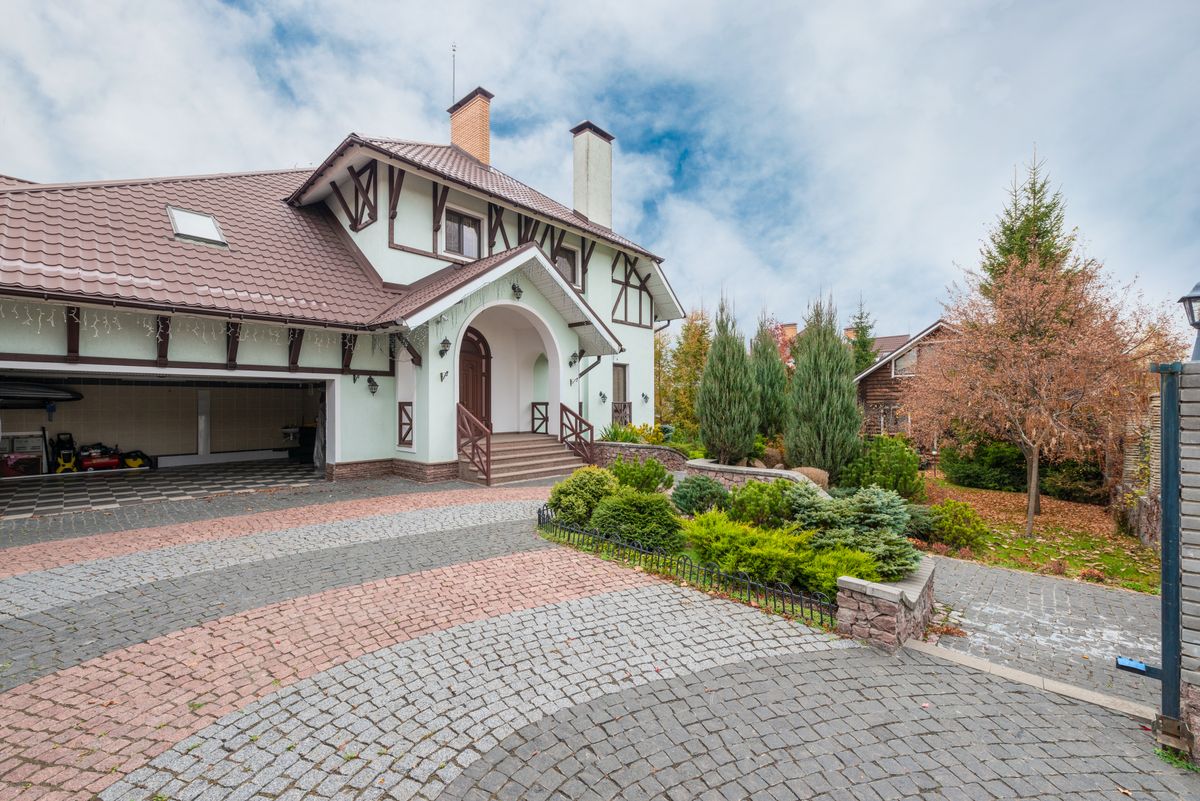
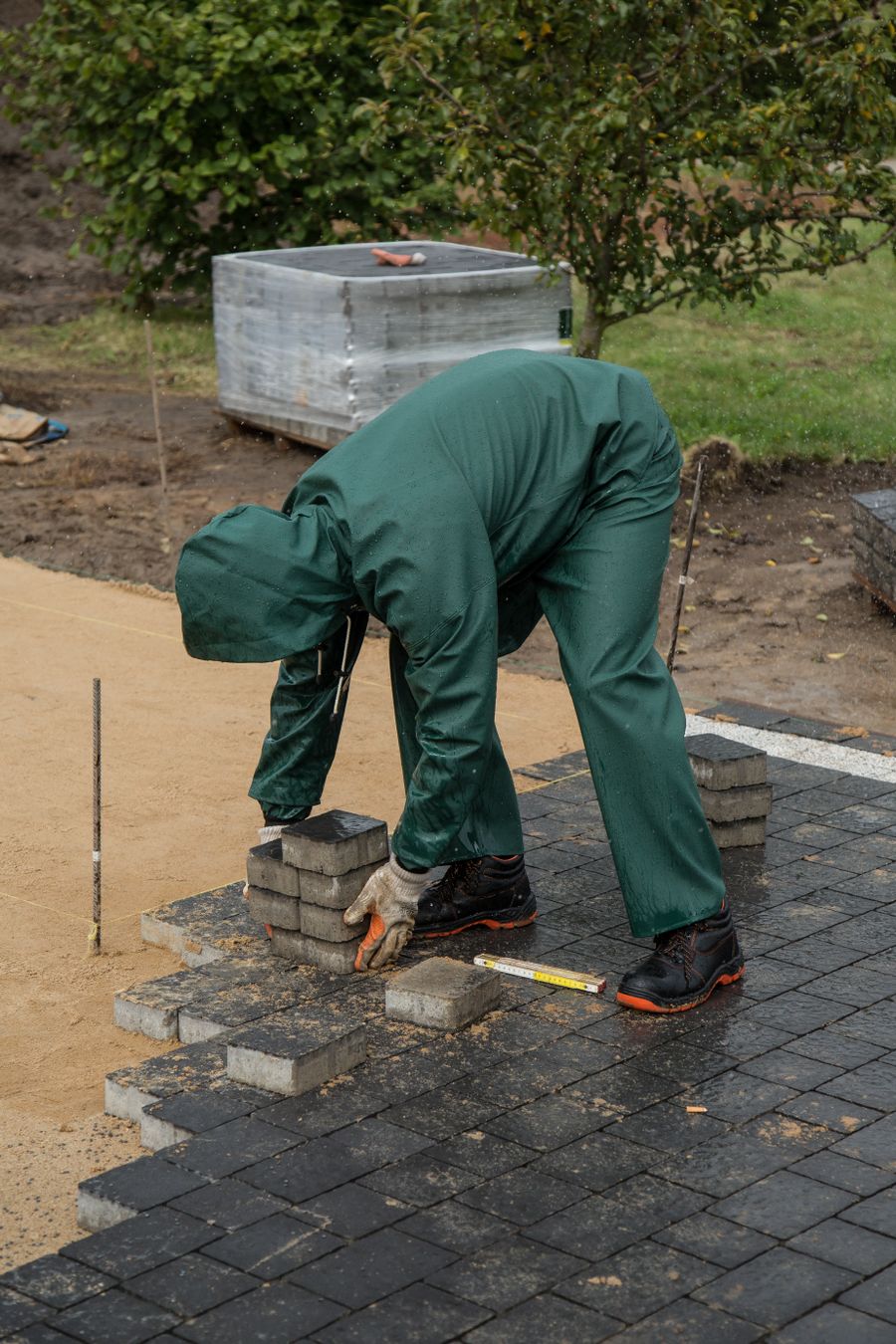
The pitch on a paver driveway in Montgomery County isn’t aesthetics — it’s the long-game arithmetic. A concrete slab cracks once and you live with the patch. A paver driveway with a single sunken or stained unit gets that unit lifted, the base re-graded, and the paver reset, sometimes within an afternoon. Over 30 years, in a climate that swings from 95° humidity to a frozen February ground, that repairability is the whole argument.
What that argument looks like on the ground in our service area:
Honest 2026 number for a properly installed paver driveway in our service area is $22 to $45 per square foot, with most projects landing $26 — $34. Below is the same line-item breakdown that ships with every Kempf Mill proposal — pavers themselves are roughly a third of the cost; the base and labor are the rest.
Premium product lines (Unilock Brussels Block, Techo-Bloc Blu 60 Smooth, tumbled clay cobbles) and intricate circular-drive layouts push that ceiling closer to $27,000. Permeable paver systems — with open joints over an open-graded aggregate base for stormwater credit — add roughly $4 — $6 / sq ft.
Typical 600 sq ft paver driveway in standard product. Permeable upgrade often pencils out for stormwater compliance.
Longer 800–1,400 sq ft circular and estate drives, frequent premium-line and tumbled-cobble specifications.
Tighter 600–800 sq ft drives with high curb-appeal expectations — herringbone with soldier course borders.
A paver patio gets 4″ of base. A driveway sees a 4,000 lb SUV plus delivery vehicles — it gets 8″, installed in three 2.5–3″ lifts with a 5,000-lb plate compactor between each. This is the single most-cheated line item in residential paver work in Montgomery County, and the one we’re asked to fix on a year-three call-back.
Maryland clay is fine-grained. CR-6 is open-graded. Without a woven geotextile separator, the two intermix over the seasons and the base loses its load-bearing structure. Geotextile fabric is $0.50 / sq ft of insurance against the sub-grade failure mode that ends paver driveways early.
Bedding sand is laid in a uniform 1″ layer, screeded flat with rails, then never walked on before the pavers go down. Variation in bedding depth is what creates the slow waviness people associate with old paver work — not the pavers themselves.
Without a locked edge, the outer course of pavers slides under tire load and the whole field unwinds. We use spiked PVC restraints, galvanized steel restraints, or a poured concrete toe depending on the site — never glue-down or sand-only edges on a vehicular surface.
Polymeric sand is swept into the joints, the field is vibrated with a plate compactor (rubber-mat protected), then the sand is misted to activate the binders. Done correctly, the joints become a flexible monolithic seal — weed-resistant, ant-resistant, and frost-tolerant.
For lots near the Potomac River and along Cabin John Creek where Montgomery County stormwater rules cap impervious surface, a permeable paver driveway (joints filled with open-graded stone over an open-graded base) often pencils out as a stormwater credit instead of a deduction. We’ll spec it with you if your project sits in one of those zones.
The structurally strongest pattern for a vehicular surface. The interlock distributes tire load across multiple pavers, which is why it’s the default for any drive that sees more than light passenger traffic. Our most-installed pattern across the service area.
A cleaner, more contemporary read — rectangular pavers laid in offset rows with a contrasting border course. Pairs especially well with the modern infill homes going in around inner Bethesda and West End Rockville.
Tumbled-edge concrete cobbles (Techo-Bloc Aberdeen, Belgard Cambridge Cobble) and real clay pavers (Pine Hall Brick, Glen-Gery) for Potomac estate drives and historic Bethesda properties. Clay reads warmer over decades; concrete is cheaper up-front and colorfast.
For longer Potomac approaches, a contrasting band every 12–15 feet visually shortens the run; circular-drive entries often anchor with a paver fan or compass-rose medallion. Adds $3 — $5 / sq ft on the affected area but transforms the curb view.
We pull all of it. Permit fees ($200 — $600) are itemized.
Pavers cost roughly 2× a comparable concrete pour up-front, but spread that across a 30–50 year life and the per-year cost narrows. The deciding factor is usually one of three things: how you’ll plow it, whether utilities run under it, and whether the look matters more than the number. We’ll walk you through the trade for your specific lot — sometimes concrete is the honest answer.
Reinforced 4″ slabs over 6″ CR-6, broom / exposed aggregate / stamped finishes — 2026 pricing and Montgomery County permit details.
$22 — $45 per square foot installed. A standard 600 sq ft drive in a 60mm Belgard or Techo-Bloc paver lands $14,000 — $22,000. Premium product lines and intricate borders push that toward $27,000+, and longer Potomac estate drives can run higher.
30 to 50 years on a properly installed ICPI-spec base. Individual pavers can be lifted and reset to repair sunken units or access utilities — a paver driveway is more like a quilt than a slab.
Not when installed correctly. The full system — 8″ compacted base, locked edge restraints, polymeric sand — is engineered for freeze-thaw climates. When pavers shift, the cause is almost always a thin base or missing edge restraint.
Yes, with care. Use a rubber-edge plow blade or a snow blower with skid shoes set to skim the surface. Calcium chloride or magnesium-based ice melts are preferred over rock salt, which can stain some lighter paver colors over years of repeated use.
Every 8 — 12 years on a well-installed driveway in our climate. If you start seeing weeds or ant activity in the joints, it’s time. The refresh is straightforward: pressure-wash the joints out, sweep new polymeric in, activate.
Often, yes — particularly on lots near the Potomac River, Cabin John Creek and the C&O Canal where impervious-surface coverage is capped. Permeable pavers can convert your driveway from impervious to pervious in the stormwater calculation, freeing up coverage for the rest of your project.
Primarily Belgard (Cambridge Cobble, Holland Stone, Mega-Arbel), Techo-Bloc (Blu 60, Aberdeen, Villagio) and Unilock (Il Campo, Brussels Block, Series 3000). Clay pavers from Pine Hall Brick and Glen-Gery on request. We’ll spec the line that matches the architecture and bring samples to the site walk.
For the line-item cost breakdown that informed the comparison above — sub-base depth, reinforcement, permit fees, finish options — the 2026 driveway-cost post on the Journal is the deeper read. Read the breakdown →
Interlocking paver driveways cost more up front and last longer. These guides cover the trade-offs, the upkeep and Maryland pricing.
Asphalt every 2–3, concrete every 3–5, pavers every 3–5 — the freeze-thaw and road-salt reasons behind each, and the signs it’s past sealing and time to repave.
Line-item pricing for Potomac, Bethesda and Rockville driveways — sub-base, rebar, finish, permits and what to negotiate.
Freeze-thaw, expansive clay, road salt — the three forces behind every crumbling 1980s and ’90s driveway in Bethesda, Rockville, and Silver Spring.
Site walks across Rockville, Potomac and Bethesda are no-charge and no-pressure. Pattern samples on site, line-item proposal in your inbox inside 72 hours.
Request a paver driveway estimate